• Skip to primary navigation
  • Skip to content
  • Skip to primary sidebar

Intelligence 101

Teaching You About Intelligence Analysis

Online Intelligence Training – Foundation Training For Intelligence Analysts 

  • Get Started Here
  • HOMETake me back
  • ABOUTWhat We’re About
  • All-Source IntelligenceSee All Our Blog Posts Here
    • Analytical Tradecraft
    • All Source Intelligence
    • Criminal Intelligence
    • Human Intelligence (HUMINT)
    • Imagery Intelligence (IMINT)
    • Intelligence Agencies
    • Measurement and Signature Intelligence (MASINT)
    • Military Intelligence
    • Open Source Intelligence
    • Psychological Operations (PSYOPS)
    • SIGINT
    • Spying and Espionage
    • Surveillance
  • RESOURCESTools of the Trade
    • Frequently Asked Questions
    • Ebook
    • Open Source Intelligence Masterclass
    • Intelligence Analysts Bookshelf
  • CONTACTGet in contact

Ben Stark

Online Intelligence Course: Foundation Training for Intelligence Analysis

By Ben Stark on September 10, 2019 0

Online Intelligence Course: Foundation Training for Intelligence Analysis

Intelligence Analysis is a learned skill.

…All it takes a keen eye, an inquisitive nature and the ability to ask the right questions.

This comes with time and training.

Online Intelligence Course: Foundation Training for Intelligence Analysis

But Where Can You Learn The Skills You Need To Become An Intelligence Analyst?

I often get asked;

  • What courses are available for Intelligence Analysts?
  • How can I learn the skills needed to become an Intelligence Analyst? and
  • Is there any online training suitable for Intelligence Officers?

So this week, I’m sharing the BEST Intelligence Training Course Available Online.

Foundation Training for Intelligence Analysis

This interactive course provides you with a great introduction to Intelligence theory, analytical techniques, and critical thinking!

All the important foundations for good Intelligence Analysts.

What if you had the skills to turn everyday information into quality intelligence?

Discover exactly how Intelligence Analysts collect secrets, collate data and process information to develop timely and accurate Intelligence advice.

Avoid information overload and gain the skills to ‘filter the noise’, by directing your intelligence collection and being able to draw the ever-important ‘so what‘ from your information.

Great News for Anyone Wanting a Career in Intelligence

With more and more information and data available each day – the demand for qualified and skilled Intelligence Analysts has never been higher.

Today, we need people who can cut through the noise. People who are able to understand issues and problem-solve to make accurate assessments.

Learn how information and fits and build the bigger piece of the puzzle.

Who is the Foundations of Intelligence Analysis Course Designed For?

It’s a complete introductory course for anyone interested in pursuing a career in intelligence or learning about the intelligence cycle.

This course is perfect for people interested in learning more about how Intelligence is created.

It teaches the basic principals of critical thinking, applying analytical techniques, and making accurate assessments.

Our course is designed to take you by the hand and walk you, step-by-step through the Intelligence Cycle – Just look at this cool graphic I made to illustrate my point!

Online Intelligence Course: Foundation Training for Intelligence Analysis - The Intelligence Cycle

Who’s this Ben Stark chap? (i.e. the course creator).

Ben is a 10-year veteran of Intelligence with a proven track record of tactical, operational and strategic expertise in Intelligence Analysis.

He’s a graduate of the Australian Army School of Military Intelligence and holds academic qualifications in Criminology, Policing and Criminal Intelligence.

Ben has deployed on multiple overseas missions to the Middle-East providing Intelligence support to conventional troops and elite special forces units. His experience includes Counter-Insurgency, Time-Sensitive-Targeting operations and Counter-Terrorism operations.

Today Ben is a Criminal Intelligence Analyst and contributes to the development of Intelligence Analysis with the Intelligence101 blog and his book, Essential Tradecraft For Intelligence Analysts.

** Ben will also routinely talk about himself in the third person to build credibility and authenticity with his audience. 😛

What is Teachable? (the site the course is hosted on)

Teachable is an online learning platform similar to ‘blackboard’ used by colleges and universities to host online learning.

The Foundations of Intelligence Analysis Courses is presented in a sleek and modern format with text, video and comments.

The course itself consists of 10 action-packed modules. Everything you need to take you from intelligence zero to analyst hero.

Lessons have dedicated activities to put skills into use and interact with other students while consolidating lessons learnt.

Foundation of Intelligence Analysis is Unique For 3 Reasons:

1.  You’ll learn how to process information in a way that helps you think outside the box and develop your problem-solving skills.

2. Understand how Intelligence Agencies collect classified information (through HUMINT, SIGINT, IMINT, OSINT, etc) and turn it into advice for both decision-makers and door kickers alike.

3. Put on your analytical thinking cap by working through a real scenario and applying your Intelligence skills and new Analytical techniques.

By the time you finish the Intelligence Course you will:

  • Have a comprehensive knowledge of the Intelligence Cycle and the Foundations of Intelligence Analysis.
  • Be able to undertake Intelligence Inquiry by developing collection plans and writing Intelligence Briefs.
  • Understand Intelligence Collection methods including HUMINT, SIGINT, IMINT, GEOINT, and OSINT.
  • Compile Strategic Analysis and deliver Oral Briefings.
  • Apply your Intelligence training to different roles and environments including Law Enforcement, Military, Counter-terrorism, & Open-Source Intelligence Investigations (including missing persons).
  • Develop your critical thinking and learnt to use various analytical methods.
  • Understand the impact of Intelligence in multi-disciplinary roles.

Without the course…

You could enrol in a four-year college degree costing thousands of dollars and read those dry-dusty academic textbooks.

You could browse to one of the thousands of government websites and try to extract the lessons from old operations and make sense of the various military pams.

You could subscribe to the Intelligence subreddit and join the online banter without really learning any skills.

Instead, Learn From Someone Who’s Been There & Done It

With a decade of experience and well-over 2000 quality Intelligence assessments I’ve learnt how to make the complex simple. It comes with the territory.

In this course, I distil my experience into ten online modules taking you through the foundations of Intelligence Tradecraft.

Try the Foundation Course for Intelligence Analysis for a full 60-Days, 100% Risk-Free.

Try the entire course. If you don’t LOVE it, I will personally refund 100% of your money back. I’ll even wear the credit-card processing fees.

Let me tell you exactly why I offer this unbeatable guarantee. When I first started learning about Intelligence, I felt overwhelmed.

I read all the books and reams of academic “Intelligence theory” which typically lacked any practical advice or real-life experiences.

I don’t want that for you. I want you to learn everything you need to know to become a successful Intelligence Analyst and apply the lessons straight away.

learn Online Intelligence Course: Foundation Training for Intelligence Analysis

How Do You Know If The Course Is Right For You?

Do you like secrets?

Do you like solving problems?

Do you like knowing more than others?

Do you want to feel morally superior to those operational folk who sit around and just talk shit all day?

Then I’d say Intelligence is probably for you! Get started with us today – Risk-free.

See What Our Successful Intelligence Analysts Are Saying –

Foundation Training for Intelligence Analysis - Intelligence Students

Foundation Training for Intelligence Analysis - Intelligence Students

Foundation Training for Intelligence Analysis - Intelligence Students

Some people choose ‘information overload‘.

Others Learn Fundamentals for Intelligence Analysis

learn Online Intelligence Course: Foundation Training for Intelligence Analysis

In Summary –

Thanks for taking the time to invest in yourself, and for enjoying the Intelligence101 blog.

I’ve loved putting together the course, and the feedback already (after only a short period) has been incredible.

Should you wish to learn more about Intelligence Analysis I really would encourage you to take the course, there’s heaps of great content (plus video and activities also).

If you’ve got any questions, or need any further information – please do not hesitate to email me directly.

I read / respond to every email, and love fielding readers questions.

teach you the Art and Science of Intelligence Analysis,

P.s. If you’ve reached the end of the page and you’re not convinced I can teach you the Art and Science of Intelligence Analysis, it’s all good. There’s plenty of great articles on the blog –

24 Lessons Learned From a Decade of Intelligence: How to create Intelligence that actually matters

Intelligence Target Packs and Intelligence Profiles (Plus Templates You Can Download)

The ULTIMATE Guide to Becoming An Intelligence Officer…(With Frequently Asked Questions)

But if you do think you’ve got what it takes, and you’re keen to take control of your future and your career – then get started with us today!

24 Lessons Learnt From a Decade of Intelligence: How to create Intelligence that actually matters

By Ben Stark on August 30, 2019 0

24 Lessons Learnt From a Decade of Intelligence: How to create Intelligence that actually matters

With a decade of experience and well-over 2000 quality Intelligence assessments I’ve learnt some simple and universal truths about Intelligence.

Here are 24 of the most important lessons I’ve learned over the past 10 years in the Intelligence-biz.

What is your question? 

As simple as it sounds, if you don’t know what you don’t know, you’re going to be hopelessly lost before you’ve even started.

Quite simply, the most important thing is to hone in on your problem, and frame it in a simple to approach the question.

  • Should ANTIFA be classified as a terrorist organisation?
  • Do anti-consorting laws actually have an effect on Outlaw-Motor Cycle Gangs?

Framing your question correctly gives clear and concise direction for collection, research and assessment. It also helps to avoid those ‘all-nighters’.

What should you promise your customer?

Answer: A solution.

An intelligence brief is not a tick-box exercise. Your job is to define the problem so clearly that the customer can determine the best solution.

If your customer is left wondering you’ve not solved the problem. So then it’s back to the drawing board.

Less is more.

Intelligence assessments will often morph and grow.

As you research and design the assessment it’s easy to get swept up in the hype and try to stuff as much text, images and mapping into a single PowerPoint slide as you can.

Don’t over-egg the pudding. If it feels like you’re getting off-topic, or shifting the purpose of the brief, just park that element and pick it up later.

Your personal image matters (so does your reputation).

We have an old saying in the Intelligence game, you’re only as good as your last assessment.

And so, you need to remember, your image will be constantly called into question by your audience.

For example, if you’re a lazy or inept analyst, you can bet your assessments will be viewed with the same level of criticism.

Tell them something they don’t know.

Otherwise, what’s the point?

Your job isn’t to confirm what they already know, it is to provide timely and accurate Intelligence that actually informs decisions.

So, you need to tell them something they don’t know – and it needs to matter! Otherwise, you may as well be reporting the news.

Imagination is key.

You’ve probably heard the age-old debate about whether Intelligence more Art or Science.

Well, every good analyst must have a creative side. Don’t be afraid to chase an imaginary rabbit, free your mind to explore creative solutions – let the artist in you flourish.

Don’t be a bore.

There’s no nice way of saying it. But no one enjoys listening to the incessant mono-tone droning of a boring Intelligence brief.

Learn to tell a good story and involve the customer in the story. Use their experience, draw references they’ll know and take them on a journey.

Make sure it’s actionable.

If there’s no point to it, then there’s no point.

Give the audience something to take home, something to use and something to do.

Make your work matter by adding in a rousing call to action – even if it’s just to rouse more collection.

Don’t pull your punches.

Intelligence analysts are advisors, so make sure you advise!

Don’t shirk your responsibility by telling the customer what they want to hear, or agreeing to their opinion because it’s a safer option.

If you disagree, own it.

Know your audience, and where they’ve been.

It’s best to know who your audience is, and their experience.

Do your homework, and speak to their reference points – you’ll create a deeper connection and allow your assessments to bind with their experience.

Bad news doesn’t get better with age.

Always give it to them straight.

New leadership needs to come correct.

Time and time again I’ve seen bullish new leadership come rushing in with a raft of ideas, keen to make their mark on the organisation.

Often promises of a ‘revolutionary new system’ or ‘improved processes’ shine as bright as a magnesium trip-flare only to fizzle out after thirty seconds.

 You need to learn the systems, learn the processes, and understand the people before determining the best way forward.

The best way to achieve buy-in is by understanding the problem and serving the customer. Don’t be so quick to reinvent the wheel.

Not my monkey, not my circus.

Know what you can control, and own it. Accept what isn’t yours and do your best to play in the sandbox you’re in.

A picture is still worth 1000 words – maybe more!

Don’t use words when you could use a picture.

Develop the skill to present without text, use supporting images or props to tell your story.

Learn to utilise programs (like Canva) and build slides, images and graphics that tell a story for you.

Give examples.

We all learn through shared experience, so give examples. It’ll help others learn.

Provide time for questions.

Always allow time for feedback and questions, take every opportunity to satisfy questions, and deliver more value in every answer.

Accuracy, Brevity and Clarity.

Consider what you need to say, and what can wait for questions.

Provide a summary and keep the detail, you can always elaborate later.

Ghetto Done.

It doesn’t have to be perfect. But it does have to get done.

If an email achieves the outcome then get typing, if a phone call will suffice…then pick up the phone.

Get the info to where it’s needed. Keep it ghetto, and get it done.

If you can’t write it, just say it.

Don’t waste your time right-clicking and using the MS Word Synonyms just to sound smarter.

Say what you’re thinking in the clearest possible way.

If you can’t write well – just say what you’re thinking.

The ‘so what’ factor?

Every point should matter.

Every statement should have a ‘so what?’ relevance. Always ask yourself, So what? What does it mean?

Fight for information.

Information isn’t always going to just come to you.

Good intelligence analysts know they need to fight for information, which means asking questions, finding resources and getting after it.

Develop your network, and if you cannot answer a question, ask around – ask who might and don’t be afraid to pick up the phone until you get what you’re after.

This alone separates good analysts from the average.

Follow up, don’t make it up.

It’s more than acceptable to not know something. You’re human, you’re not expected the know everything.

What is unacceptable is to make up an answer.

If you don’t know then just say you don’t know. You won’t be crucified.

When it’s all said and done, find out and follow up.

Keep it factual.

Keep your emotions in check.

Decision-makers need you to present facts, findings and clear assessments.

Try to remove ‘you’ from the assessment and deliver the information without emotion.

Keep the main thing the main thing.

The quality of your intelligence depends entirely on the focus of your question. Maintain your focus.

Is this everything you’ve learnt?

Not at all.

These are simply a handful of the lessons that apply across the spectrum of Intelligence Operations.

If you desire to become an intelligence analyst or want to learn the skills needed to turn everyday information into Intelligence – I’ve developed a separate and specialised course just for you.

Click here to get instant access to our online Intelligence Training Course. 

Intelligence Target Packs and Intelligence Profiles (Plus Templates You Can Download)

By Ben Stark on August 16, 2019 0

Intelligence Target Packs and Intelligence Profiles (Plus Templates You Can Download)

Let’s face it, Decision-makers love Tactical Profiles!

That’s why I’m showing you how to create your own Intelligence Target Packs and Intelligence Profiles.

What are Target Packs?

Target Packs are an Intelligence Product designed for targeting individuals, groups, locations or specific operational threats.

They are, in essence, an executive summary of intelligence information and analysis to better understand the background, history or involvement of a target within an operational context.

I’ve seen target packs compiled a bunch of different ways. But they all seem to contain basically the same information.

Target packs usually include biographical and personal information, including;

  • Target Names;
  • Date of birth;
  • Address / Last known location;
  • Technical details (such as mobile phone IMSI / IMEI numbers);
  • Images (such as picture or map); and
  • Other information relevant for that threat, issue or group.
Intelligence Target Packs and Intelligence Profiles.
Intelligence Targeting ‘Baseball Card’ – Source: Lawfareblog

Target packs need to contain information specific and relevant for you and your mission.

This example is courtesy of Lawfareblog and can be found at this link.

Target Pack Template

We’ve created the template below for you to download and use.

Intelligence Target Packs and Intelligence Profiles (Plus Templates You Can Download And Use Later)
Target Pack Template – Click the Image (or link above) to Download.

Tactical Profiles

Intelligence analysts are often asked to compile ‘profiles’ for known persons of interest.

Target profiles are usually commissioned at the request of the tactical customer to provide a detailed report of a target, suspect or person of interest.

The request usually goes a little like this:

Decision- Maker:  “What do we know about …?”

Intelligence Analyst: “Roger that, I’ll see what I can find.”

This request occurs more often than you would think.

Each profile is typically collated and updated as more information is collected and analysed.

Target profiles are also developed by intelligence analysts to assist in operation planning. They’re often used as a way to summarise reporting. 

Intelligence Target Packs and Intelligence Profiles (Plus Templates)
Target Profile Example – Source: The Intercept

This example is courtesy of The Intercept, Article No. 2 – The Drone Papers.

Intelligence Target Profiles Are Used For: 

  • Compiling information on specific targets;
  • Identify Intelligence gaps;
  • Highlight Intelligence opportunities; and,
  • Assist in operational planning.

Target profiles typically include;

  • Family and relationships;
  • Lifestyle and habits;
  • Employment details;
  • Criminal record details;
  • Financial profile; and,
  • Links to criminal groups and / or organised crime groups.

Often the Decision-Maker will request an Intelligence Profile highlighting certain risks, or specific threats. The following products can be used to communicate the Intelligence information and analysis in an easy to read product.

Intelligence Target Profiles
Download PDF Version of the Intelligence Target Profile – Click image or link above.

To download a PDF version of our Profile Template click here.

In Summary

Profile-type products come in handy when assessing an individual in respect to a particular threat, risk or issue.

Templates

To assist we’ve compiled the following templates to help you – Click on the images below to download the PowerPoint Slide Templates.

Intelligence Target Packs and Intelligence Profiles (Plus Templates You Can Download And Use Later)
Intelligence Targeting Profile – ‘Baseball Card’ Template
Intelligence Target Packs and Intelligence Profiles (Plus Templates You Can Download And Use Later)
Organisational Leadership Target Pack – Template
Intelligence Target Packs and Intelligence Profiles (Plus Templates You Can Download And Use Later)
Target Location – Template


Activity

Have you used any of these products before? Got any hints or tips you can share with the Intel101 audience?

Show me your profiles by posting your templates or improvements in the comments section below. Help others by sharing your insights.

Happy hunting.

Intelligence Career Advice, Killing the Intelligence Cycle & Specialist Skills from Prof. Kris Wheaton – Sources and Methods Blog

By Ben Stark on June 16, 2019 0

Intelligence Career Advice, Killing the Intelligence Cycle & Specialist Skills from Prof. Kris Wheaton – Sources and Methods Blog

Anyone who’s ever googled ‘Intelligence Analysis’ will probably have seen Kristan Wheatons’ intelligence blog – Sources and Methods.

Intelligence101 Interview with Prof. Kris Wheaton –

I remember reading this blog when I was a budding soldier preparing for my first overseas deployment.

This week, we hear directly from Kris as he drops some knowledge bombs and shares his insight from years of teaching intelligence studies at Mercyhurst University.

NB: Between completing this interview and posting the article Prof. Wheaton has announced he is leaving his long-held position at Mercyhurst University to become the Professor of Strategic Futures at the US Army War College. Congrats!

In this short article you’ll get;

  • Intelligence career advice
  • Doing intelligence vs just learning about it
  • A unique skill / tip recommended to any potential intelligence analyst (no, it’s not “learn a language”)

Introducing Prof. Kristan Wheaton

Kristan Wheatons’ intelligence blog – Sources and MethodsStarting in the 59th US Army Artillery Group back in 1985, Kris saw numerous intelligence postings throughout his military career before becoming an intelligence professor at Mercyhurst in 2003.

He started the sources and method blog way back in 2004, when ‘blogs’ weren’t really a thing.

The sources and Methods blog was initially developed as a way to talk about interesting things coming across his desk each day.

Since then Kris has published almost 1000 posts on intelligence, collection, analysis & all elements of the intelligence profession.

Kris owes his success to his time spent actually ‘doing intelligence’, rather than just focusing on the theory.

Killing the Intelligence Cycle

In a must-read thirteen part series, Kris explains how he’s abandoned the old ‘traditional’ intel cycle in favour of a much more appropriate and efficient parallel process of intelligence production.

Intel cycle dead or alive

“What helps make so many of our products successful, less expensive to produce and faster to write is our view of the intel process.”

While I personally strongly advocate for the use of the intelligence cycle, Kris’ article is a recommended read for budding intelligence analysts! 

Intelligent Career Advice For Intelligence Professionals

Some of you would be aware that I wrote a detailed piece on how you can become an intelligence today (even if you’ve got no experience).

Without the need for the degree, titles or training offered by ‘traditional intelligence’ routes.

Kris also agrees and believes, more than ever today it’s entirely possible to get into intelligence without going through the government first.

“One of the biggest problems for someone trying to get an intelligence job is whether Intel is right for them.”

A lot of students have misconceptions about intelligence work and sometimes they do not realise that it is a bad fit until they actually get on the job.

Intelligence Education – Should you study that Intelligence Degree?

In our interview, Kris offered that one of the best ways to avoid this is to start with a degree program that focuses on the applied side (the actual “doing”) of intelligence.

“If your readers are looking for a career in intelligence, I would recommend that they look for a suitable intelligence studies degree program.”

“I would encourage intelligence students to look for a program with a strong focus on application as well as theory (such as the Mercyhurst program).”

In terms of professional education, there’s something to be said for actually getting involved and doing intelligence rather than just talking about it.

Programs such as the Mercyhurst Intelligence Program, provide the foundation and often help students find various opportunities in the intelligence community.

The International Association for Intelligence Education (IAFIE) is another great resource for finding intelligence education programs.

 IAFIE is the leading International Organization for Intelligence Education

Specialist Skills for Intelligence Professionals

Rather than repeat advice that you’ve probably heard before,

Kris recommends developing a highly valuable but often underdeveloped skill in most young intelligence analysts…

Graphics and visualizations are some of the most effective ways to communicate the results of analysis but far too many young analysts have cut their teeth on only text-based products.

Learn graphic design!

Graphics and visualizations are some of the most effective ways to communicate the results of analysis but far too many young analysts have cut their teeth on only text-based products.

Specialist Skills for Intelligence Professionals

“Getting good, or at least better with graphics is a skill I would recommend to every analyst.”

Resource: if you’ve seen any of my article images throughout the blog, I use a free online graphic design website called Canva.

As a typical ‘left-brainer’, I can assure you I do not have an artsy ‘creative mind’, so this is a great resource in line with what Kris recommends.

Intelligence career advice Doing intelligence vs just learning about it A unique skill / tip recommended to any potential intelligence analyst (no, it’s not “learn a language”)

So that’s our interview with Prof. Wheaton, make sure you check out his blog over at Sources and Methods, and if you’ve got any questions for him you can post them in the comments section of this article – or find him over on twitter @kwheaton.

Wanted: A Definition of Intelligence

By Ben Stark on May 10, 2019 0

Wanted: A Definition of Intelligence

In this weeks’ article, I take on a Goliath –

See, at some point in every intelligence analysts career, there’s a need to stand up and be accountable…

And for me, that day has come.

Today, it’s time to take on the haters, to stand up and actually provide a definition of intelligence…

Now, before you slump in your chair and roll your eyes (I know what you’re thinking),

This is not an exercise in academic platitudes but rather an important debate in determining the fate of the profession of intelligence! (emphasis added)

Why is defining intelligence so important?

Throughout my career, I’ve witnessed numerous debates about the ‘correct definition of Intelligence.’

It seems this topic is actually a bit of a hot-button issue for some (cough**academics) who often had a hard time coming to terms with a ‘standard definition’ for both the practice and product of Intelligence.

I’ve read countless journal articles and research papers that discussed the definition of intelligence (often at length) leaving me bored and ultimately none-the-wiser as to the ‘correct definition’.

That was until I realised, there is no correct definition for Intelligence.

The reason it’s so important is because, no one can seem to agree what intelligence is –

Is intelligence: 

a) The process?

b) The practice?

c) The product?

or

d) All of the above?

Wanted: A Definition of Intelligence

In 2002, Michael Warner wrote a short article titled Wanted: A Definition of “Intelligence”, in which he highlights the problems with defining intelligence. He states ‘even today, we have no accepted definition of intelligence.’

What’s the US Department of Defense Definition?

In seeking a single point of truth, you would expect to rely of the US Department of Defense (DoD) for a reliable definition.

DoD offer the following [very wordy] holistic definition of intelligence;

Here’s some other attempts to define Intelligence

  • Intelligence definition 3. ‘Actions or processes used to produce knowledge.’
  • Intelligence definition 4. ‘Secret, state activity to understand or influence foreign entities.’
  • Intelligence definition 5. ‘Information of military, economic or political value that is collected, processed and analysed to inform actions to provide an advantage.’
  • Intelligence definition 6. ‘Intelligence is knowledge of the enemy’

In the end, only one thing is clear: there is no agreed one definition for intelligence.

My Definition of Intelligence

So, I’m offering a simple and easy definition to inform our understanding throughout this book.

What to see it? well, here it is –

  • My Intelligence definition. ‘Intelligence is processed information, for action’

Beautiful.

Now, I understand there’s going to some be people out there who might not agree entirely with my suggested definition for intelligence.

Guess what? That’s fine!

As I said, there is no single or common definition for the collective theory, practice and craft of intelligence.

Your Definition of Intelligence (Activity)

My definition of intelligence is based on my understanding and my experience –

Like any good intelligence professional, I would suggest you do your own research and come up with a definition of your own.

And this brings us to our activity…

Activity

Read through Warners article above and come up with your own definition of intelligence. Post your definition of Intelligence in the comments below –

As always, to your intelligence.

Interview Series: Learn How Trace Labs Use Crowdsourced OSINT to Find Missing Persons with Robert Sell

By Ben Stark on April 16, 2019 0

Interview Series: Learn How Trace Labs Use Crowdsourced OSINT to Find Missing Persons with Robert Sell

INTERVIEW SERIES_ INTERVIEW WITH ROBERT SELL TRACE LABS - Crowdsourced Open Source Intelligence for Missing Persons (1)

Use OSINT to Find Missing Persons – 

This week we get some great advice from Robert Sell of Trace Labs about his work in the OSINT space.

Trace Labs are at the forefront of Open Source Intelligence and Online Investigations.

They combine the latest tech, with online investigations & intelligence to find and reuniting missing persons –

Pretty cool stuff, IMO.

This article highlights key points from my interview with Robert to help you if you’re interested in getting into the OSINT space.

It doesn’t matter if you’re a novice or packing years of experience – Trace Labs provide a unique aspect to OSINT and some tips on working in the OSINT space.

To see the unedited answers, a PDF version of my interview is here.

Trace Labs Intelligence 101 Interview

What is Trace Labs and where did it come from?

“Trace Labs started out of frustration mostly.”

As a Search and Rescue volunteer, Rob explained how he sees just how many people are reported missing, but how very few are actually searched / found.

“I often wondered who was looking for these people if we were not.”

So as a tech professional he began to think of a way he could apply his knowledge to improve this situation…

Robert reached out to security and information consultants, building his network and learning skills along the way.

After a while, he was in touch with a group of Online investigators and hackers who were using the latest tools in online investigations.

Trace Labs received critical acclaim at DEFCON in Las Vagas, where it was accepted as an official contest in 2018.

Since then Trace Labs have held events every month all around the world.

What are some OSINT lessons you can share with the Intelligence101 audience?

OSINT is always changing.

Rob explains there is always new stuff you don’t know –

Whether it’s a new tool or a cool technique, the ever-changing environment is the new norm for people working in the OSINT space.

“I listen to about 2 hours of podcasts and audiobooks per day which is mostly around this subject. I also do a lot of research on the industry in general.”

“This makes me feel like I’m winning but the industry is moving so fast there are still lots of surprises.”

Some lessons I have learnt the hard way are as follows:

Preparation: Get your platform and tools sorted out so you can begin operation at a moment’s notice.

  • You want to be able to operate without building a bunch of tools and then shut it down only to do it again the next day but perhaps on a different target.
  • I think tools such as Hunchly greatly aid in operations. I document both my techniques and tool configurations so if I have to, I can re-build new.
Trace Labs Intelligence 101
Trace Labs – Capture The Flag (CTF) Leader Board

OSINT preferences are meaningless if the subject ain’t on there!

You might be a boss at pulling stuff from Facebook, but if the subject prefers YouTube or another medium your skills are useless.

Don’t try to fit the investigation around your expertise, find the social media / medium the target / subject prefers.

Network

Don’t be shy to ask for help. I am amazed at how helpful this can be. New perspectives can be amazingly helpful.

Time

Realise we live in a world of 15-minute increments. When you are doing OSINT it is best to turn the phone off (and the TV) and really focus.

  • Make sure you have at least an hour to focus.
  • I suggest at least a few hours but even one dedicated hour without distractions can be very productive.
  • After four hours your mind will begin to have issues and you likely need a coffee, walk or some other stimulant.
  • Avoid interruptions!

Recommended OSINT Resources for Intel101 Readers

Many beginners get stuck and this can lead to frustration.

I often point them to the inteltechniques.com website as it has lots of tools on it.

In particular, I like the new edition of Michael Bazzell’s book as it has some wonderful workflows at the back.
 Michael Bazzell OSINT Techniques Intelligence 101

Interested in Intelligence & investigation career – why not get involved part of the work Trace Labs does?

Trace Labs are always looking for passionate people and there are dozens of projects people can get involved and help out with.

One key differentiator that separates Trace Labs from other events or groups is that they focus on the non-theoretical. Rather than doing OSINT on fake info contestants look for real people.

If any of the Intelligence101 audience want some experience to put on a resume, Robert has said Trace Labs can assist also –

For more information on the Trace Labs mission check out their website at – Tracelabs.org and if you enjoyed reading this article, don’t forget to subscribe for more and regular updates.


  • Page 1
  • Page 2
  • Page 3
  • …
  • Page 10
  • Next Page »

Primary Sidebar

Best of Intelligence101

  • Online Intelligence Course: Foundation Training for Intelligence Analysis
  • 24 Lessons Learnt From a Decade of Intelligence: How to create Intelligence that actually matters
  • Intelligence Target Packs and Intelligence Profiles (Plus Templates You Can Download)
  • Intelligence Career Advice, Killing the Intelligence Cycle & Specialist Skills from Prof. Kris Wheaton – Sources and Methods Blog
  • Wanted: A Definition of Intelligence

Get Our Newsletter

INTREP: Do You Want To Be A Better Intelligence Analyst? Want Weekly Intelligence Tips and Techniques? Join Our Mailing List Below...

100% privacy. No games, no B.S., no spam. When you sign up, we'll keep you posted with one an email per week.

Categories

  • About Intelligence 101 (1)
  • All Source Intelligence (2)
  • Become A Better Intelligence Analyst (17)
  • Bias (1)
  • Counterintelligence (1)
  • Criminal Intelligence (1)
  • Cyber Intelligence (Hacking) (1)
  • Human Intelligence (HUMINT) (2)
  • Imagery Intelligence (IMINT) (1)
  • Intelligence 101 (10)
  • Intelligence Agencies (3)
  • Intelligence Case Studies (1)
  • Intelligence Resources (3)
  • Intelligence Training (1)
  • Interview Series (2)
  • Measurement and Signature Intelligence (MASINT) (1)
  • Military Intelligence (1)
  • Open Source Intelligence (2)
  • Political Intelligence (1)
  • Psychological Operations (PSYOPS) (2)
  • Resources (1)
    • Product and Service Reviews (1)
  • Security Intelligence (1)
  • SIGINT (1)
  • Spying and Espionage (1)
  • Surveillance (1)
  • Uncategorized (7)

Intelligence Analysts Bookshelf_ Essential Reading For Intelligence Professionals
99 of the BEST Intelligence Resources
The Ultimate Guide to Human Intelligence (HUMINT)
Fifteen Axioms for Intelligence Analysts
How to Become an Intelligence Analyst Today (…even if you’ve got no experience)
Intelligence Tradecraft: The Value of Probabilistic Thinking
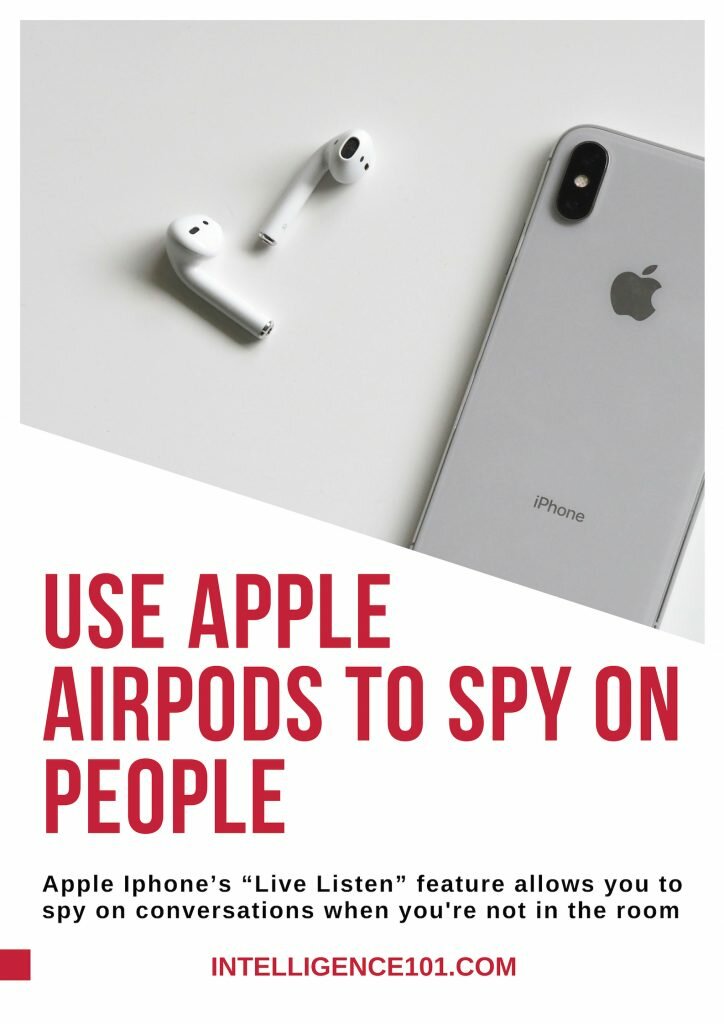
You can now spy on people using your Apple AirPods!
Strategic Intelligence & Global Threat Insights: Delivered Everyday by NightWatch
  • Intelligence 101
  • About
  • Privacy Policy, Terms and Conditions
  • Get Started Here
  • Intelligence Frequently Asked Questions
  • Blog Posts
  • Intelligence101 – Online Intelligence Analysis Course

Copyright © 2019 · Smart Passive Income Pro on Genesis Framework · WordPress · Log in